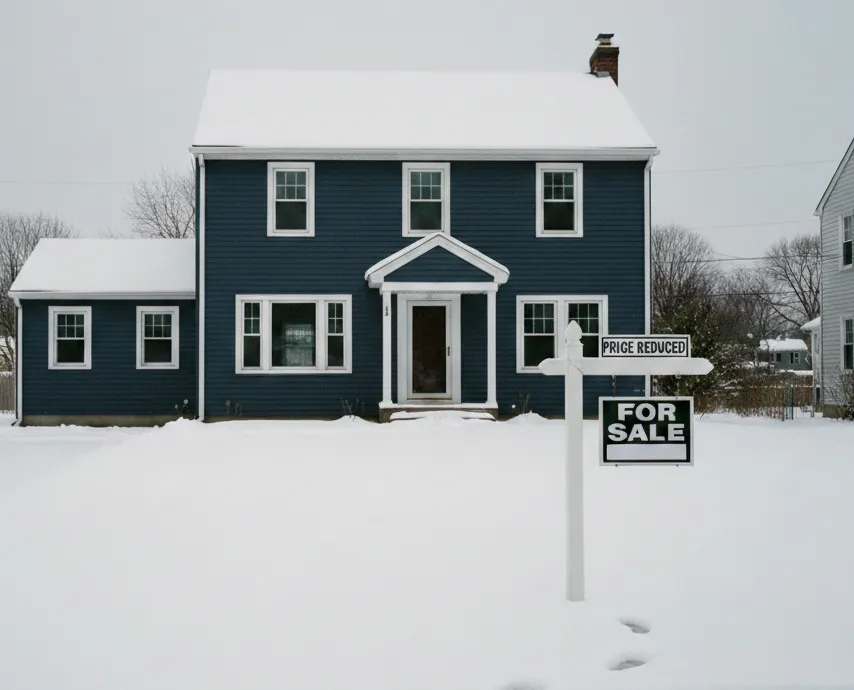
How Much Are You Going to List Your CT Home For? There Are Only 3 Real Strategies
North Haven, 2022. Nice Cape Cod hits the market at $375,000.
I told the seller $325k–$350k based on the comps. Showed him the data. He was convinced it was worth $400k.
We compromised at $375k. That's agent-speak for "I caved because I wanted the listing."
Week one: an offer comes in. Then the buyer backs out. No inspection. No explanation.
Two weeks later: a second offer. This one makes it to inspection. Then backs out.
Now every showing turns into the same conversation: "What's wrong with this house?"
The listing expired. The seller hired another agent. Listed at $350k—my original range. Sold in weeks for asking price.
Here's what that compromise cost: months of carrying costs, two failed deals, and a tainted listing story that had to be explained to every buyer who showed up.
Buyers see the history before they ever see the house. Once a home has two canceled deals or sits longer than expected, buyers assume one of two things: something's wrong with the house, or the seller won't negotiate.
Either way, the burden shifts. Buyers stop evaluating the home and start evaluating the risk.
Pricing isn't picking a number you feel good about. It's choosing the outcome and the plan for the first two weeks.
And you don't get a first impression twice.
Six Questions Control Your Sale (and Here's Where Pricing Actually Fits)
Six questions control your CT home sale. Answer them in order or lose your mind.
How much are you going to list for?
When are you going to list?
Pricing only makes sense after Why, Who, Where, and Prep are clear.
One clarifier before we go further: condition matters more than most sellers think. And curb appeal isn't optional. Dead lawn, peeling paint, junk in the driveway? Buyers decide you're a problem seller before they reach the front door.
Buyers don't price repairs one by one. They lump it all together—and always overestimate the cost. You have two choices: fix it, or price it low enough that buyers don't care. What doesn't work is ignoring condition and expecting top-of-market price.
Pricing Strategy vs. Tactics (This Is Where Sellers Get Misled)
Strategy asks: "What outcome are we trying to create with the list price?"
Tactic asks: "How do we deploy that price so the right buyers actually see it and respond?"
These aren't tricks. They're standard tools.
Many agents pitch tactics—odd-number pricing, sliding under search filters, charm pricing—without ever discussing strategy.
That's backwards.
Strategy defines the goal. Tactics only execute it.
Strategy 1 — Price for Certainty
Goal: A clean, predictable path to closing.
When to use: Timeline matters. Low tolerance for surprises.
This is the "let's get this done" strategy. You price at or slightly below recent comparable sales.
You trade maximum sale price for maximum odds of actually closing.
Here's why: appraisers compare your home to what's already sold—not to what you hope it's worth. Lenders fund based on that appraisal, not your story about why the house is special.
When your price fits inside the range of recent sales, fewer things break. When you stretch above it, the deal only survives if nothing else goes wrong.
Strategy 1 works because it removes risk. Fewer appraisal problems. Fewer renegotiations. Fewer buyers who suddenly get "cold feet" the week before closing.
Presentation still matters. This strategy reduces risk after you've handled repairs and staging—it doesn't excuse skipping them.
Strategy 2 — Price to Trigger Competition
Goal: Create urgency and competition to drive the price higher.
When to use: Seller wants competitive pressure to push the final price above what a single-buyer negotiation would deliver.
This is the "feeding frenzy" approach. You price below what similar homes have sold for to get multiple buyers competing at once.
Competition works because buyers don't care what you're asking—they care about beating the other guy.
When enough serious buyers see the same house at the same time, they stop hesitating. They start moving fast.
Done right, you get multiple offers and the final price climbs above where you started.
Done wrong, you attract bargain hunters or create chaos with no real leverage.
Condition still matters. If you won't clean out the garage, paint the front door, or mow the lawn, you can't price like the house is move-in ready. Buyers aren't stupid. They'll lowball you anyway.
Strategy 3 — Price to Test for a Premium (With Rules)
Goal: See if there's a buyer willing to overpay because they can't find another property like this.
When to use: Truly unique or hard-to-comp homes.
This works for waterfront with deeded beach access. Historic homes with documented history. Properties with acreage and privacy in towns where land like that doesn't exist anymore.
It fails when sellers confuse "I like it" with "it's actually rare."
The rules matter:
Short test window
Agreed-upon price adjustment if buyers don't respond
No emotional attachment to the test price
Markets answer fast.
If that buyer exists, they show up in the first two weeks. If they don't, silence is your answer. Long test windows don't gather better information—they just create stale listings and train buyers to wait for a price drop.
If you're not willing to drop the price quickly when the market says no, don't test at all.
Madison: The "Diamond in the Rough" That Never Got a Showing
Madison, 2019. Seller wanted $800k for his mid-1800s colonial.
The data said $600k.
The house sat north of Route 1, just outside the zone for the shoreline premium you get south of the highway.
Location hurt. Condition killed it.
Exterior paint needed. Patio needed work. Kitchen and baths needed replacement. Roof needed replacement.
The seller's justification for $800k:
Apartment over the garage
Separate septic system added for apartment
Grape vines (unmaintained, but he liked them)
He priced based on what he spent and valued. Buyers priced based on condition, location, and comps.
Another “compromise” on price: listed the house at $770k.
Six-month results:
0 showings
0 calls
1 open house visitor (a neighbor)
10 open houses total
The listing didn't fail to sell. It failed to get a conversation started.
The seller asked where the list of buyers was. Unfortunately, buyers had the same data everyone else did.
Re-listed multiple times. Sold years later near $650k.
Pricing above market without condition to back it up doesn't get you rejection. It gets you ignored.
The Tactic Toolbox (Adjustments That Support Your Strategy)
These are tools you use after you've picked Strategy 1, 2, or 3.
Search-threshold positioning. Price at $399,000 instead of $405,000. You stay visible to buyers searching "under $400k." Cross that line and you disappear from their results. Works with any strategy.
Offer deadlines. Set a firm date for all offers. Forces buyers to decide now instead of waiting. Only pairs with Strategy 2—you need competition for this to work.
Appraisal planning. If you're pricing aggressively or testing high, decide now what happens if the appraisal comes in low. Will you cover the gap? Renegotiate? Walk away? Not a decision you want to wrestle with while the buyer is breathing down your back and agents are watching their commission disappear.
Negotiation cushion. Some agents tell you to add 3-5% to your price so you have "room to negotiate." That's code for overpricing and hoping buyers don't notice. In a seller's market, you don't need it—competition already pushes price up. In a buyer's market, you'll sit while your competition sells. Don't do it.
Adjustment triggers. Decide up front: if we don't get X showings in two weeks, the price drops by Y. No "let's wait and see." Markets answer fast. Waiting just creates stale listings.
None of these fix bad strategy or poor condition. They execute the plan after you've done the work.
Ready to pick your strategy? Call 203-464-1479 or email [email protected] and I'll show you what Strategy 1, 2, and 3 look like for your home.


