How to Get Your CT Home Ready to Sell
Comparable sales in your area determine what prep work pays off. Generic advice doesn't.
Three years ago, a Branford homeowner made some updates in preparation for selling.
High-quality work. Beautiful finishes. Kitchen, bathrooms, flooring. $150,000 invested.
One problem: The house was worth $265,000 to $280,000 after the upgrades and they ended up $75,000 underwater.
They're still living there.
Not because the market crashed. Connecticut's still a strong seller's market—3,931 active listings with 3,319 December sales (SmartMLS). About 1.2 months of inventory.
3 years later, the house is worth $340,000 to $350,000.
They're still in the hole.
Worse: they now have to buy their next home at prices 30% higher than three years ago.
Why Generic Advice Keeps Costing CT Sellers
Agents hand out generic advice: Update the kitchen and bathrooms. Fresh paint throughout. Stage the house. Improve curb appeal.
Sometimes that's correct. Sometimes it's a $75,000 mistake.
Generic checklists can't answer the questions that actually matter:
What did comparable homes in your neighborhood actually sell for?
What condition were those sold homes in?
How many similar homes are for sale right now competing with yours?
Sometimes Simple Wins
Listed a North Haven home two years ago in a strong seller's market. One other comparable property for sale within a mile.
They wanted to redo the floors and kitchen before listing. They had quote totaling $56,000.
I told them not to do it.
Other homes sold in the area had the same early 2000’s kitchen and mix of hardwood and carpet flooring.
The improvements wouldn't push the house into a higher price bracket based on comparable sold homes.
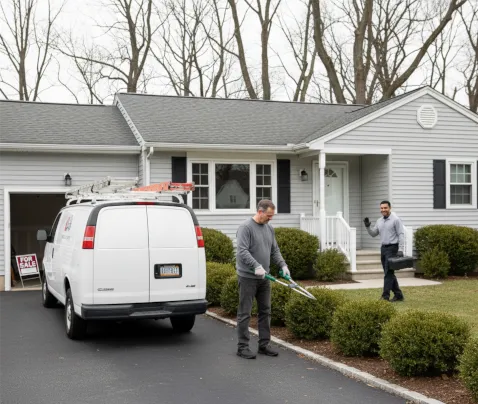
Instead, they made sure all maintenance was up to date, decluttered the house, cut the grass and trimmed the bushes.
The house listed for just under $500,000.
After one day on the market:
13 offers.
Seven were cash.
The house went under contract for 10% over asking.
This simple strategy was tailored to the specific house and market. It saved the seller a ton of money, time and stress.
Never Optional
Deferred maintenance and critical systems aren't negotiable in any market.
One I see constantly: heating systems.
Gas-fired, oil-fired—doesn't matter. Both require maintenance and cleaning. Both eventually need replacement.
Listing a home with an old, broken-down, asbestos-covered heating system will result in a lower selling price. Any buyer presented with a poorly maintained or failing system is going to price that into their offer.
Same principle applies to:
Active water leaks or structural damage
Broken windows or HVAC equipment
Non-functional appliances
Safety concerns like exposed wiring, mold and unstable steps or flooring
These kill deals in any market.
Beyond critical repairs, a few low-cost prep moves make sense in almost any market—not because they're on some generic list, but because they cost little and rarely hurt your sale price.
Low Cost, High Impact
Stretch your dollars by doing low cost, high impact things.
Decluttering.
Fewer items in a room make it feel bigger. Personal items like pictures make it hard for buyers to see themselves in the house.
Side benefit: less to move when you sell, maybe some extra cash from selling unwanted items.
Check out my 3-box method blog for tips and tricks.
Curb appeal.
Cut the grass, trim bushes, edge the driveway, add mulch and flowers in warmer months.
Remove anything you've been "storing" in the yard—cars, trailers, tires.
Fix obvious damage: torn screens, broken gutters, peeling paint, missing siding.
Do you need to spend $25K on landscaping? In some neighborhoods, yes. In most, no. Focus on making the house look maintained, not magazine-ready.
Staging.
Depending on your home and market conditions, staging can mean hiring a professional or making simple changes yourself.
Simple staging: clean counters, add lighting in dark rooms, open curtains for natural light.
Small changes that improve first impressions without big expense.
Why Generic Checklists Fail
Useful advice requires visiting the property and understanding the seller’s specific situation.
If a house needs $50,000 of work but the seller has $15,000 to spend, priorities matter. Deferred maintenance and critical systems first—furnace over landscaping, roof leaks over outdated tile.
Beyond that? It depends.
Should the bathroom get updated or the backyard? Depends which is in worse shape. And what comparable homes for sale look like. And what recent sales support. And the budget. And the timeline.
Two Ways This Goes
Follow generic prep advice and hope your neighborhood supports it.
Or base your prep decisions on what comparable homes in your market actually require.
The Branford seller followed generic advice. Three years later, still can't leave.
The North Haven seller used comp data. Sold for 10% over asking in one day.
Before you spend money prepping your house, find out what buyers in your specific neighborhood are actually paying for.
Call 203-464-1479 or email [email protected] with your address. I'll pull current comps and tell you what prep work makes sense for your specific market.


