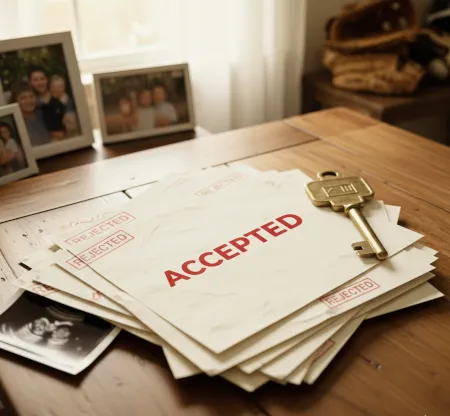
The Connecticut Home Buyer Crisis: Hope Isn't Working (But 14 Rejections Revealed What Does)
Most buyers don't fail because they pick the wrong house.
They fail because they use the wrong process to find it.
They start looking at houses before they understand their starting point, their true needs, their timelines, their financial reality, and the market they're stepping into.
It's not their fault.
Most agents don't have a process.
They throw buyers straight into showings and hope for the best.
Hope isn't a strategy.
Dream to Doorstep is.
The 14-Offer Wake-Up Call
By offer number 10, James was starting to doubt me.
Hell, I was starting to doubt myself.
His wife was pregnant. They had six months to find a house before the baby arrived. Good financial position. Pre-approved. Ready to move.
Should have been straightforward.
Instead, we lost. Again. And again. And again.
Offer after offer after offer. Thirteen times.
The first 10-11 homes? I didn't truly understand James' situation—what he was really looking for, what made sense for his family, what leverage he actually had. I was using the same generic approach for every offer. The market was getting tougher for buyers as time went on. And James was starting to wonder if I knew what the hell I was doing.
By offer 14, something clicked.
We could see what worked and what didn't from watching winning offers. We refined the strategy completely. Changed positioning, terms, approach. That 14th offer—crafted specifically for James' situation and that particular seller—finally won.
They moved in just in time to welcome their child into their new home.
But 14 offers was ridiculous.
Those 13 rejections weren't wasted. They taught me everything.
They showed me that generic approaches fail in competitive markets. That you can't wing it and hope things work out. That buyers need a system—a real one, not just "let's go look at houses and see what happens."
What I learned from helping James through 13 rejections became the foundation of Dream to Doorstep.
The Numbers Don't Lie
Before I built the system?
My buyer clients averaged 8-9 offers before going under contract.
After implementing Dream to Doorstep?
Less than 3 offers before going under contract.
That's a 63% reduction in wasted time, lost weekends, emotional rollercoasters, and homes that got away.
Eight or nine attempts down to less than three.
Same market. Same competition. Same Connecticut real estate chaos.
The only thing that changed was the process.
But Should You Even Be Buying Right Now?
I already know what you're thinking.
Rates are high. Prices are up. Maybe you should wait for the crash everyone keeps talking about.
That's expensive logic.
Every month you wait, your rent goes up. Connecticut rents have been climbing 6-8% annually. That's $100-$200 more per month walking out the door—money that could be building equity in YOUR house instead of your landlord's retirement fund.
Meanwhile, you're building zero equity. That's an additional $1,200-$2,400 per year gone forever.
And when rates do drop? Everyone who's been sitting on the sidelines rushes in at once. Competition explodes. Prices jump. You trade high rates for bidding wars and even higher purchase prices.
The best time to buy isn't when the market is perfect—it's when YOU'RE ready with a proven process that gives you an edge.
That's what this system does.
Why You Need a System (Even If You Think You Don't)
The moment you find "the one," everything becomes real:
Pressure. Competition. Deadlines. Decisions. Money. Risk.
A system removes chaos from the equation.
It replaces "I hope this works out" with "I know exactly what happens next."
Dream to Doorstep gives you:
Clarity on what you actually need vs. what Zillow made you think you want—so you don't waste months chasing houses that look good online but don't fit your life
Confidence in every decision because you know the strategy, the timeline, and exactly what leverage you have—no more second-guessing yourself at 2 AM
Speed when it matters—so you can move fast on the right house instead of watching it go pending while you "think about it"
Protection from the mistakes first-time buyers always make—wrong lenders, missed red flags, weak offers, getting steamrolled by deadlines
A plan built for YOUR situation—your budget, your timeline, your competition, your market—not some generic "buyer's guide" that doesn't apply to you
You don't need more information—you need better direction.
What Happens When You Trust the System
Carlos and Jenn came to me ready to buy in Milford.
Perfect situation.
Except for the first two offers.
They tried to "nickel and dime" in a seller's market. I told them market conditions require aggressive offers if you want to compete. They went low anyway.
Got blown out...twice.
After the second rejection, Carlos said: "Dave, just tell me what to do."
Third offer, they let me guide the strategy completely.
Competitive offer, limited “as-is” inspections, appraisal gap coverage, quick close on a renovation loan and more.
They got the house. Beat 3 other offers.
That's what happens when you trust the system instead of fighting it.
What Happens When You Don't Have A System
Bill and Sue were buying their first condo in North Haven. They wanted to use their local bank. "It's going to be so much better," they said.
I recommended a mortgage broker I've worked with for years—someone who closes deals, answers 24/7, gets it done.
They chose the bank anyway.
Condo documents were sent to the lender 30 days before closing.
No response from the bank.
Four days before closing, Bill checks his email.
One line: "Your loan application is rejected."
No phone call. Nothing else. Just rejected.
The bank finally answered. "Too many rental properties in the complex."
They'd had the condo resale package for 30 DAYS. Did nothing with it. Four days out, they reject the loan.
Mortgage commitment already sent. Sue and Bill at risk of losing their deposit—several thousand dollars. Already paid for appraisal, inspection. Looking at $5,000+ lost because of the bank's incompetence.
Four days to fix what the bank screwed up in 30.
I called Chris Nielsen from Northeast Financial. He said no reason for the rejection, something's wrong. "Send me their info, I'll get it done in two weeks."
I called the listing agent, explained the situation. She wasn't thrilled but knew it wasn't Sue and Bill's fault. Chris called her to explained what he was doing. The seller agreed to extend.
Ten days later, we closed.
If I didn't have Chris Nielsen in my network, that would've been a disaster. If I didn't have somebody who could close quickly and get it done—Sue and Bill lose $5,000+.
Here's the thing:
It would've never been a problem if Chris had been involved from the beginning.
He's been doing this forever, knows what to look for in condo docs, doesn't wait until four days before closing to review critical documents.
Having the right team makes all the difference.
And knowing WHO should be on your team—before you need to save a deal—is what a real system does.
This Isn't About Real Estate. It's About Control.
A good system does one thing better than anything else:
It gives you control in a process that usually feels uncontrollable.
When Brent lost his first offer to a cash buyer, he was upset. When he lost the second one because the seller's agent went radio silent and accepted another offer overnight—he was frustrated.
But because we have a system that tracks houses even after you "lose" them, we were monitoring that original dream house.
The listing agent replied “cash buyer got cold feet. Its going back on the market.”
Brent was still interested.
We got the original dream house under contract. Closed successfully.
Brent's now settled in with his girlfriend and dogs, doing backyard improvements.
That's not luck. That's a system working behind the scenes even when you think the deal is dead.
You'll always know:
What buying strategies you can use when you find the "One"
Your priorities when faced with a tough decision in the house of your dreams
What matters to the seller and how to position yourself as the "Best Buyer"
What pitfalls to watch for and how to avoid losing your dream home to a mistake
That's why Dream to Doorstep exists.
It's not just a smoother experience—it's a smarter one.
And It Doesn't Stop at the Doorstep
Unlike most agents who disappear the moment you close, Dream to Doorstep doesn't stop when you get the keys.
You'll have support long after closing. Lost mailbox key? Neighbor issue? Utility question? I'm a phone call away.
Need a contractor, plumber, electrician you can trust? I have a list of people I personally recommend.
Want to know what your home is worth as you make major life decisions? Free monthly home valuation reports so you always know where you stand.
How to Know If You're Ready
You don't need perfect conditions to buy a house.
You need three things:
Financial readiness: If you can get pre-approved—or you're close—you're financially ready. You don't need 20% down. You don't need an 800 credit score. You need proof you can get a loan.
Emotional readiness: If you're tired of rent increases with nothing to show for it, and you're ready to build equity instead of enriching your landlord, you're emotionally ready.
Strategic readiness: If you're willing to follow a proven process instead of winging it and hoping for the best, you're strategically ready.
That's it. Three things. Not ten. Not twenty.
If you have those three, you're ready to start.
What Comes Next
Now that you understand why the system exists, the next blog shows you the foundation—the first three critical steps that most buyers skip—and why skipping them is the fastest way to lose time, lose money, or lose the house you want.
You can't craft a winning offer if you don't know where you're starting from, what you're really looking for, or what strategy fits your specific situation.
That's where we build your competitive advantage.
Ready?


