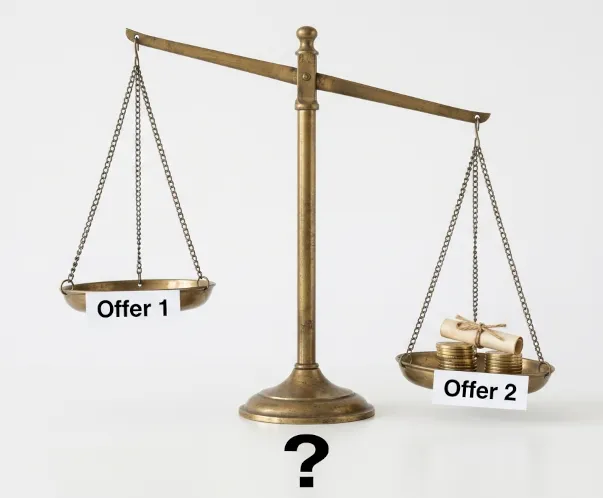
Why Connecticut Sellers Choose Certainty Over the Highest Offer
You don't know what anyone else is offering so you push your price up, just past where you are comfortable, and hope it lands. Most buyers stop there. The two sellers in these stories didn't choose the highest offer. The buyers who won understood something the others didn't — and it had nothing to do with price.
Thirteen offers. Twenty-four hours.
Price a home right in Connecticut and the market responds fast. But thirteen offers creates a different problem — not "will it sell?" but "who do we trust?"
Two stood out from the rest.
Both came in well above asking with escalation clauses and no maximum. On the surface that sounds like maximum upside for the seller. In practice, it often signals a buyer still working out the details of what they're willing to commit to. Both buyers were asked to submit their best offer — no escalation clauses.
The first came back at $535,000. More cash down, inspection contingency removed, full mortgage approval pending only the specific property. Clean. Committed. Certain.
The second came back at $550,000 — and added more inspections, kept the deposit low, and promised backing from a "friend" with no documentation to support it.
The seller chose $535,000.
Here's why that matters for you as a buyer.
Adding inspections on a best and final offer tells a story. It says: we plan to find things, and we plan to use them to negotiate the price back down. The unformalized friend money raised a different question — would it actually show up at closing? The low deposit said this buyer didn't have much skin in the game. No single piece was disqualifying. Together they painted a picture the seller didn't want to be part of.
The $535,000 deal closed on time. No drama. No issues. In Connecticut real estate, that's worth more than people realize until they've watched a deal fall apart at the closing table.
When the Lower Number Still Won
John and Hannah stopped at an open house on a whim, before a day of scheduled showings. They walked in, loved it, and made an offer. The seller had multiple offers, including one $26,000 higher than theirs.
Fiduciary rules prevent sharing the exact terms of John and Hannah's offer — that confidentiality exists for good reason. But the logic isn't complicated. Consider two hypothetical offers on the same property:
Offer A comes in above asking but not the highest number on the table. Minimal inspections — as-is with the right to walk away only if repairs exceed $5,000. Cash-backed, so no mortgage contingency. Twenty percent down. Closing timeline aligned with what the seller needs. Appraisal waived. Buyer covers a portion of seller closing costs.
Offer B comes in three percent higher. Full inspections with the right to request repairs or credits. Mortgage financing with an appraisal required — and the purchase price is already pushing the upper edge of what the neighborhood supports. Longer closing timeline.
If you're the seller, which one keeps you up at night?
The higher number means nothing if the deal doesn't close. Offer B plants three separate seeds of doubt — the inspection negotiation, the appraisal risk, the timeline. Offer A removes them before they can take root.
John and Hannah won because their offer read like a done deal. The other offer read like a negotiation waiting to happen.
What You Can Control Before You Submit
Your offer — and how well it's built.
One call to the listing agent before submitting — asking what matters most to the seller — will almost always surface something useful. Closing timeline, certainty, flexibility on possession date.
That information shapes how the offer gets built.
People are wired to move harder to avoid pain than to chase reward. Most sellers want to avoid the same pain: inspection findings that turn into a negotiation, renegotiating price for a low appraisal, a deal that collapses three days before closing because the buyer was unable to get financing.
An offer built to remove those fears answers the seller's real questions before they're asked.
The Entry Fee and What Actually Wins
Being price competitive is the entry requirement.
A lot of buyers think their financing type gives them an edge. It's worth being direct about what it actually does.
A pre-approval is the ticket to the dance. It doesn't give you an advantage over every other buyer — everyone is pre-approved.
Cash removes the financing contingency, eliminates appraisal risk, and can close faster. Those things build confidence in your offer. But they don't buy you a discount — it's all cash to the seller at closing whether it came from your savings or a mortgage.
The offer that wins isn't always the highest number on the table. It's the one that makes a seller think: this is the best buyer. The one they never have to worry about.
Thinking about buying in Connecticut and want to understand how to build an offer that wins? Send me an email.


