How Connecticut Buyers Turn Fixer-Uppers Into Dream Homes (Without Getting Buried in Repairs)
Most buyers scroll right past the listings that say “needs work.”
The prepared ones stop.
Because those homes—the ones with dated kitchens, tired roofs, and old wiring—can be the key to owning a home that truly fits your life.
Last time, we talked about why Connecticut’s fixer-uppers don’t always deliver the huge discounts people imagine.
This time, let’s look at how the right plan, financing, and team can make them a smart move.
Why Fixer-Uppers Are Still Worth Considering
Fixer-uppers show up in almost every part of Connecticut.
Many are solid houses with good layouts that just need updates.
Buying one lets you:
Enter homeownership on your own terms. You decide what to improve and when.
Stretch your budget further. You can buy at today’s price and roll improvements into your mortgage instead of paying cash later.
Create a home that reflects you. Not someone else’s finishes or color choices.
The goal isn’t to find perfection—it’s to build it.
Your Project. Your Team.
Every successful renovation has one person directing it—the buyer.
The rest of us (broker, lender, attorney, contractors) handle the details so your plan stays on track.
Our job is to bring you clear options, numbers, and next steps so you can make decisions confidently.
Jon’s Story — Quick Fix, Quick Win
Last week, my client Jon closed on a 1950s cape that most buyers skipped.
The stairs to the second floor were ready to collapse, the kitchen flooring was destroyed, the hardwood floors were scratched and stained, and the heating oil tank was starting to leak.
With the right contractor, all of these issues were resolved in a few days —the longest lead was sanding and refinishing the wood floors.
I connected my client and the right contractor. Jon offered $20 k below asking, got the deal, and is almost done with repairs already.
That’s what happens when a buyer builds the right team from the start.
How Renovation Financing Actually Works
A renovation loan combines the cost of buying the home and fixing it into one mortgage.
Here’s what really happens—step by step:
Get approved for a renovation loan that covers both the purchase price and your repair budget.
Work with your contractor to write up a detailed estimate of the work.
The appraiser looks ahead and estimates what the home will be worth after the work is finished.
You close once. At closing, the lender sets aside the money for the repairs in a separate account.
The contractor works in stages. After each stage is done, an inspector confirms it, and the lender releases that portion of the funds.
Final check. When the work passes its last inspection, the remaining funds are released and the project account closes.
Your team makes this flow smoothly:
Broker: writes the offer so the timing and inspection steps fit the loan process.
Lender: handles the paperwork, releases funds as work is finished, and keeps the numbers straight.
Attorney: keeps the contract and closing schedule aligned with loan rules.
Contractor: does the work in phases that meet lender standards.
You: make the key calls—choose scope, approve changes, and keep the vision steady.
You lead. The team makes it happen.
How to Check if the Numbers Make Sense
Start with this total:
All-in cost = purchase price + renovation budget + extra for surprises (10–20 %).
Then compare what that total gets you:
If your all-in cost is below what similar move-in-ready homes sell for, you likely gained equity and customized your home.
If it’s about the same, you’ve traded a quick discount for control—your design, your layout, your systems—and avoided paying someone else’s markup.
If it’s a bit higher, it can still be worth it if the upgrades add long-term comfort or savings.
No perfect formula—just a clear picture of where you stand before you commit.
Elida’s Story — When the Numbers Change Mid-Deal
Last month, my client Elida closed on a home that most buyers would have walked away from.
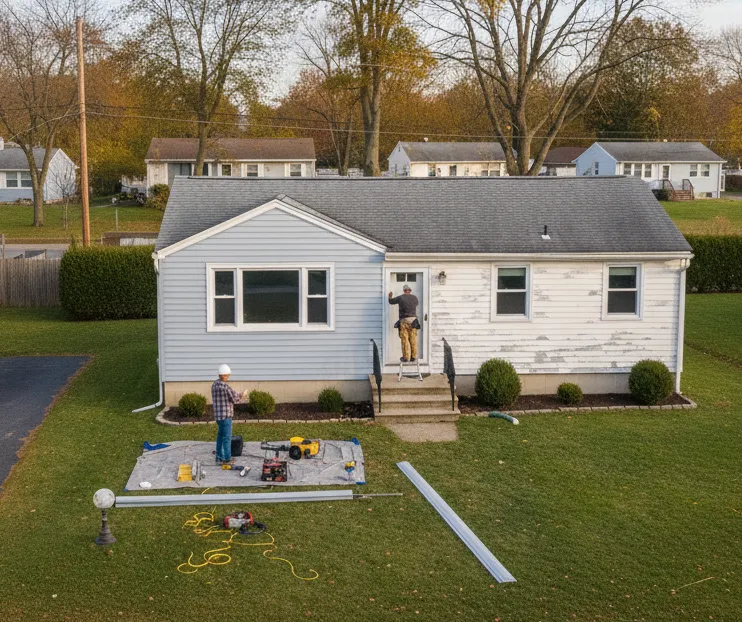
The house had solid bones but serious exterior issues—peeling paint, rotted wood, and damaged trim everywhere.
A standard FHA loan wouldn’t touch it, but with a 203(k) renovation loan, the repairs could be financed directly into the purchase.
During inspection, the numbers changed fast.
What started as a $10,000 repair estimate turned into $45,000 once the full extent of the damage was clear. On paper, the deal no longer worked.
Instead of walking away, we renegotiated. The seller agreed to a $35,000 price reduction after the contract had been signed—rare in any market.
With that adjustment, the math worked again. The renovations went ahead, the work wrapped up smoothly, and the finished result looks fantastic.
Planning Like a Pro
Get pre-approved for a renovation loan before you write offers.
If timing allows, have a contractor walk through before or during your inspection period.
Focus on structure, roof, mechanicals, and layout first; cosmetic upgrades can wait.
Expect surprises. That’s why your budget includes a cushion.
Make decisions quickly so the project keeps moving.
Preparation beats perfection every time.
What Success Looks Like
After her renovation was complete, Elida sent a short message:
“We are truly happy!!”
That one line says everything a renovation buyer hopes to feel when the dust settles.
Your Next Step
If you’ve spotted a house that needs work, don’t guess at what it might take to make it livable—or lovable.
Reach out.
I’ll connect you with lenders, attorneys, and contractors who understand renovation loans, and together we’ll see whether that “project house” could become the home you’ve been waiting for.
Because in Connecticut, the smartest move isn’t finding the perfect home—
it’s creating it.
Source: Connecticut housing-inventory data via NHPR (2025 report) and U.S. Census Bureau Housing Stock Data.


